A rental market analysis answers one question: what will a qualified renter pay for this specific home, in this specific spot, right now? In Tampa that question is harder than it looks. Rents can shift noticeably between neighborhoods a few miles apart, and a home in South Tampa, Seminole Heights, Westchase, New Tampa or Brandon is competing against a very different set of listings. Guessing, or copying one number from a rent estimate website, is how units end up sitting empty or leasing for less than they should.
This guide walks through the process leasing professionals use, and ends with a free checklist you can copy into a spreadsheet.
What a rental market analysis is (and is not)
A rental market analysis compares your property to similar rentals nearby, adjusts for the differences, and produces a realistic rent range plus a pricing strategy. It is not an appraisal, and it is not a single automated estimate. Automated rent estimates are a reasonable starting point, but they cannot see your renovated kitchen, your fenced yard or the busy road behind the property. A good analysis uses real listings and your judgment.
Step 1: Describe the property the way renters search
Renters filter before they look at photos, so start with the same facts they filter on:
- Property type: single-family home, townhome, condo, duplex or apartment.
- Bedrooms and bathrooms. Bedroom count usually drives price the most.
- Square footage and lot or yard.
- Location: neighborhood, school zone and commute access to downtown, Westshore or the bridges to Pinellas.
- Features: garage, in-unit laundry, pool or community amenities, updated finishes, parking.
- Policies: pets, lease length and what utilities or services are included.
Write this down first. It keeps you honest when choosing comps.
Step 2: Gather comparable rentals
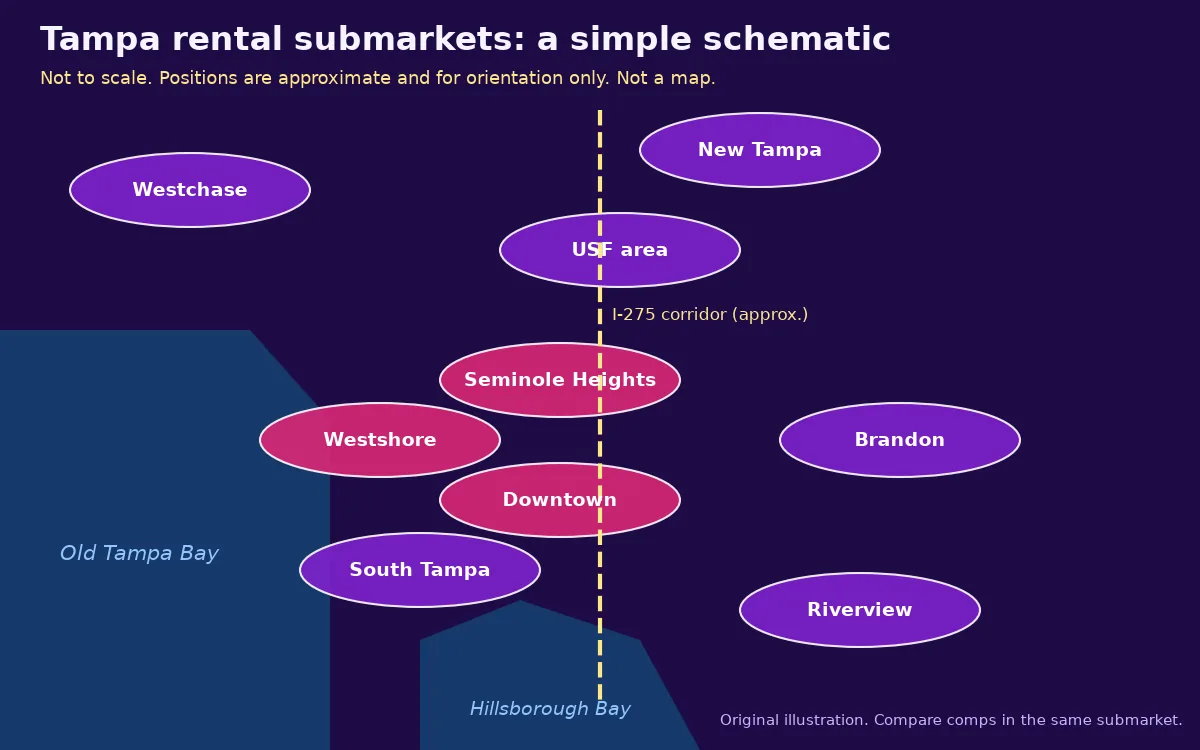
Aim for five to ten comps that match your property type and bedroom count, as close to your address as possible. Start within your neighborhood and widen the radius only if you need more.
Useful public sources include Zillow, Apartments.com, Realtor.com and local Facebook Marketplace listings. If you work with a real estate professional, MLS rental data is often the most useful because it can show closed leases, meaning what units actually rented for, rather than only asking prices.
For each comp, record:
- Address or general location
- Asking rent and any price changes
- Beds, baths and square footage
- Key features and condition
- Pet policy and included utilities
- Date listed and, if available, date leased
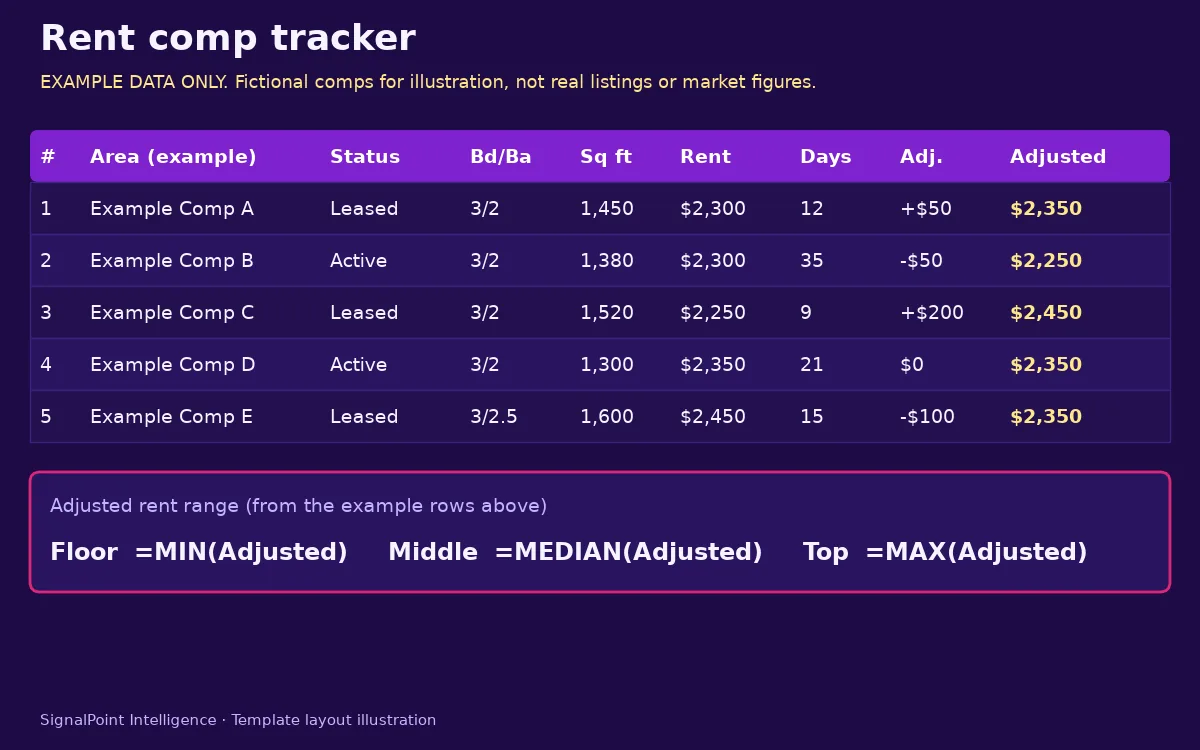
Free download: rent comp tracker spreadsheet
Get our comp tracker template (Excel and CSV). It has columns for each comp plus built-in formulas that turn your adjustments into a floor, middle and top rent range. Enter your email and the download link appears right away.
Step 3: Separate active listings from leased listings
Active listings show your competition today. Leased listings show what renters actually agreed to pay. Both matter, but they tell you different things. If active listings are priced well above recent leases, owners may be testing the market, and you should expect some of them to cut prices.
Step 4: Read days on market
Time on market is one of the clearest signals you have. A listing that has been sitting for weeks is likely priced above what renters will pay. A cluster of similar homes that leased quickly at a certain level shows you where demand is strongest. Price reductions are useful too: the reduced price is usually closer to the real market than the original.
Step 5: Adjust for differences
No comp is identical, so adjust up or down for what renters would value:
- In-unit washer and dryer versus shared laundry or hookups only
- Garage or covered parking versus street parking
- Fenced yard and pet-friendly policy
- Updated kitchen and baths versus original finishes
- Community pool or gym
- Included lawn care, pest control, water or trash
Make your adjustments based on what the comps show, not on what improvements cost you. A renter does not pay more because the new roof was expensive; they pay more for features they can see and use.
Step 6: Factor in Tampa seasonality and timing
Rental demand in most markets is not flat across the year, and Tampa is no exception. Many renters move in late spring and summer, around school calendars and job changes, while demand can soften around the holidays. If your unit will hit the market in a slower stretch, plan to price a little more competitively or offer a flexible lease length so the renewal lands in a stronger season. Treat this as a general pattern and confirm it against what your own comps are doing right now.
Step 7: Set a range and a strategy
Turn your adjusted comps into a range rather than a single number:
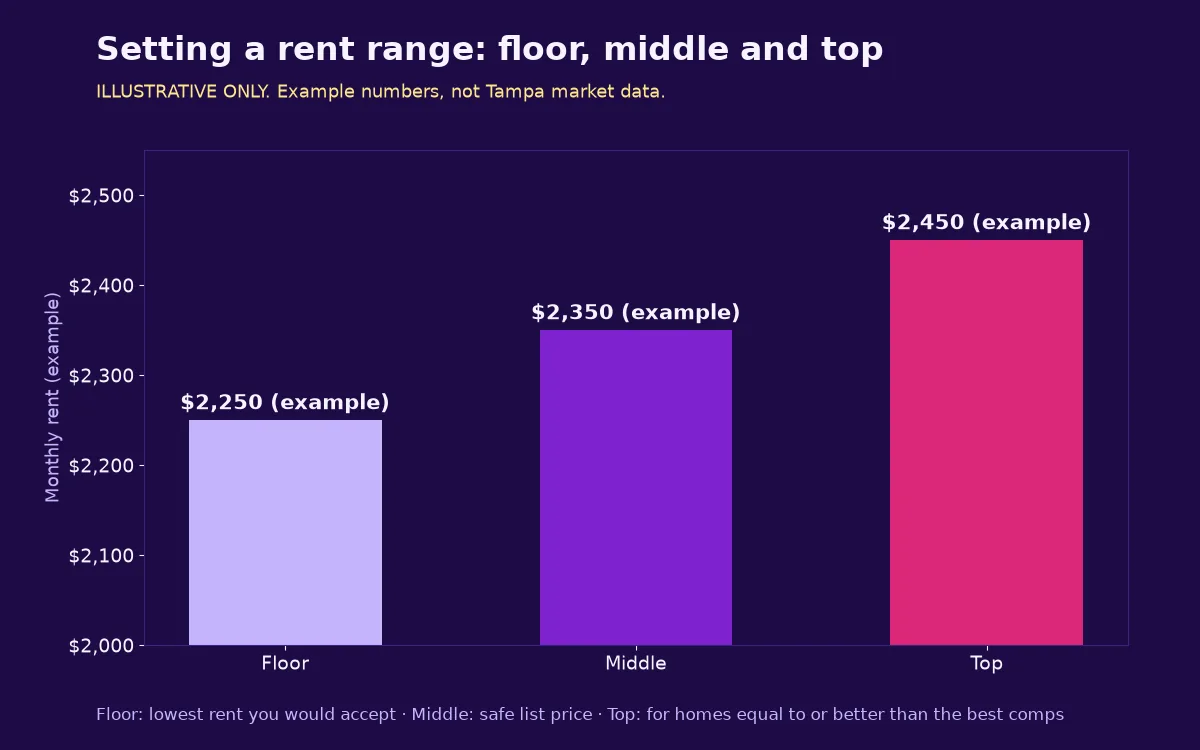
- Top of range: where the best-matched comps leased, if your home is equal or better.
- Middle of range: a safe list price that should attract steady showings.
- Floor: the lowest rent you would accept before changing your marketing or terms.
Then decide your strategy. Pricing at the middle of the range usually brings more applicants, which gives you more choice in screening. Pricing at the top can work for standout homes, but set a date to review the price if showings are slow. Every week of vacancy has a real cost, so a slightly lower rent that leases quickly often earns more over the year than a higher rent that sits.
Step 8: Check the rules before you list
Make sure your listing and lease follow Florida's landlord and tenant law, found in Chapter 83 of the Florida Statutes, along with fair housing rules and any HOA or condo restrictions on leasing. If you plan to rent short term instead, local rules depend on the city and zoning, so check with the city before you commit.
Free checklist: rental market analysis for Tampa
Copy this into a spreadsheet and fill it in for your property, or use our free comp tracker template.
Your property
- ☐ Property type, beds, baths, square feet
- ☐ Neighborhood and nearby commute routes
- ☐ Features, condition and policies
Comps
- ☐ Five to ten comps with the same type and bedroom count
- ☐ Mix of active and recently leased listings
- ☐ Asking rent, price changes and days on market for each
- ☐ Features, pet policy and included utilities for each
Analysis
- ☐ Adjusted each comp up or down for differences
- ☐ Flagged stale listings and price cuts
- ☐ Considered the time of year you will list
Decision
- ☐ Top, middle and floor of your rent range
- ☐ List price and a review date if showings are slow
- ☐ Lease and listing checked against Florida Chapter 83, fair housing and HOA rules
Free download: Tampa Rental Market Analysis Checklist
A printable one-page PDF version of the checklist landlords and leasing pros use to price a rental. Enter your email and the download link appears right away.
Frequently asked questions
Is a rental market analysis the same as an appraisal?
No. A rental market analysis compares your property to similar rentals nearby, adjusts for the differences, and produces a realistic rent range plus a pricing strategy. It is not an appraisal, and it is not a single automated estimate.
How many comparable rentals do I need?
Aim for five to ten comps that match your property type and bedroom count, as close to your address as possible. Start within your neighborhood and widen the radius only if you need more.
Why does days on market matter when setting rent?
A listing that has been sitting for weeks is likely priced above what renters will pay. A cluster of similar homes that leased quickly at a certain level shows you where demand is strongest.
What is the difference between active and leased listings?
Active listings show your competition today. Leased listings show what renters actually agreed to pay. Both matter, but they tell you different things.
When to get help
Running your own analysis is very doable, but it takes time to collect and compare comps carefully, and it is easy to lean on the listings that support the number you were hoping for. If you would rather have an outside view, our $99 Rental Market Analysis is prepared by a real estate professional with apartment leasing and property management experience. You get local comparable rentals, a recommended rent range, amenity insights and a pricing strategy, delivered by email in 2-3 business days. No call needed.
Own or manage rentals across the region? See our market research services in Tampa, or read our companion guide on how to price a rental property in Tampa.
Source: Florida Statutes, Chapter 83 (Landlord and Tenant), Florida Legislature, leg.state.fl.us. This article is general information, not legal advice.
Local research for this topic: St. Petersburg, FL, Clearwater, FL.
Want a real estate professional to run it for you?
Our $99 Rental Market Analysis delivers local comps, a recommended rent range, amenity insights and a pricing strategy within 2-3 business days. No call needed.
Have a question? Email us at aversehorizon@gmail.com.