Pricing a rental is one of the few decisions a landlord makes that affects every single month of the lease. Price it too high and the unit sits empty while you keep paying the mortgage, insurance and HOA. Price it too low and you give away money for a year or more, and you set a lower starting point for every future renewal. In a market as varied as Tampa, where a few miles can change what renters expect to pay, a careful rental market analysis is the difference between guessing and knowing.
This guide walks through the same process leasing professionals use to set rent. You can run it yourself in an afternoon.
Step 1: Define your property the way a renter would
Before you look at a single comp, write down exactly what you are offering. Renters search by filters, so your comps need to match on the same things:
- Property type: single-family home, townhome, condo, duplex unit or apartment in a larger community.
- Beds, baths and square footage. Bedroom count usually matters most, then bathrooms, then size.
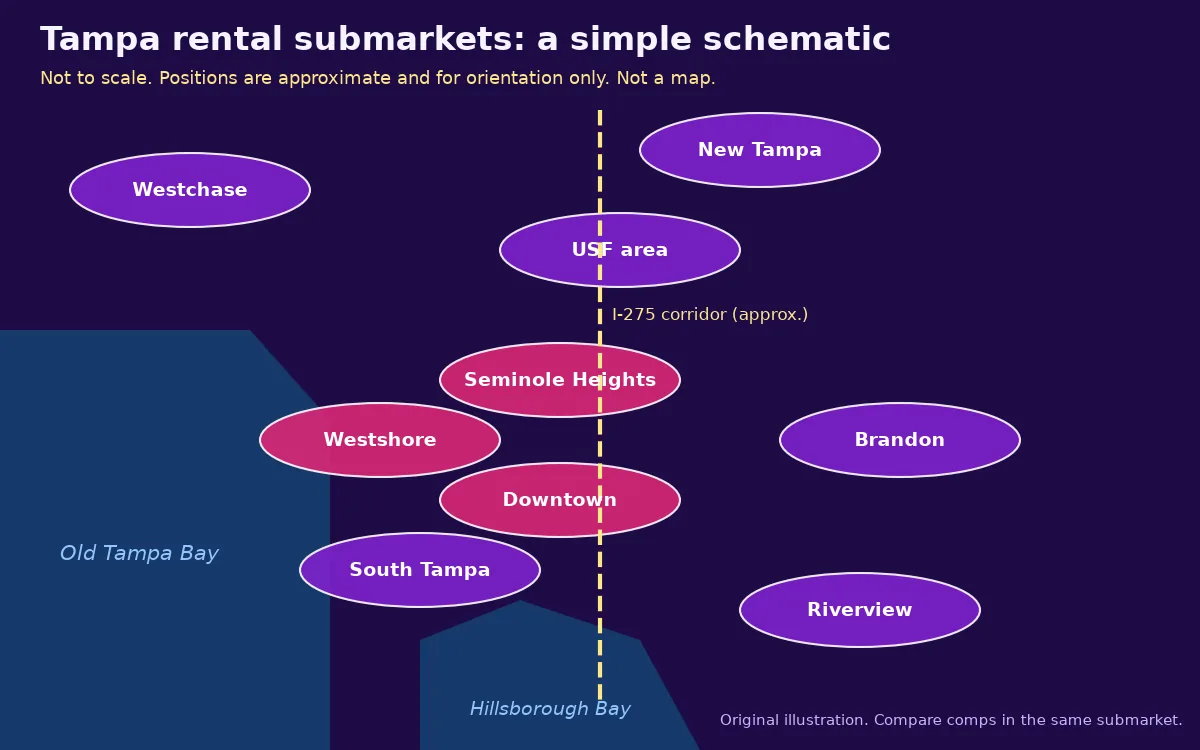
- Neighborhood. Be specific. South Tampa, Seminole Heights, Westchase, New Tampa, Brandon and Riverview each attract different renters at different price points.
- Key features: garage, fenced yard, in-unit laundry, pool access, updated kitchen, flooring, pet policy and parking.
- Condition and age. A recently renovated unit competes in a different tier than one with original finishes.
Step 2: Pull active and recently leased comparables
A comparable rental, or comp, is a similar property near yours. Aim for five to ten comps that match your bedroom count and property type, ideally within the same neighborhood or a short drive away.
Good places to look include Zillow, Apartments.com, Realtor.com and Facebook Marketplace. If you work with a real estate professional, MLS rental data is often the most reliable source because it can show what units actually leased for, not just what owners hoped to get.
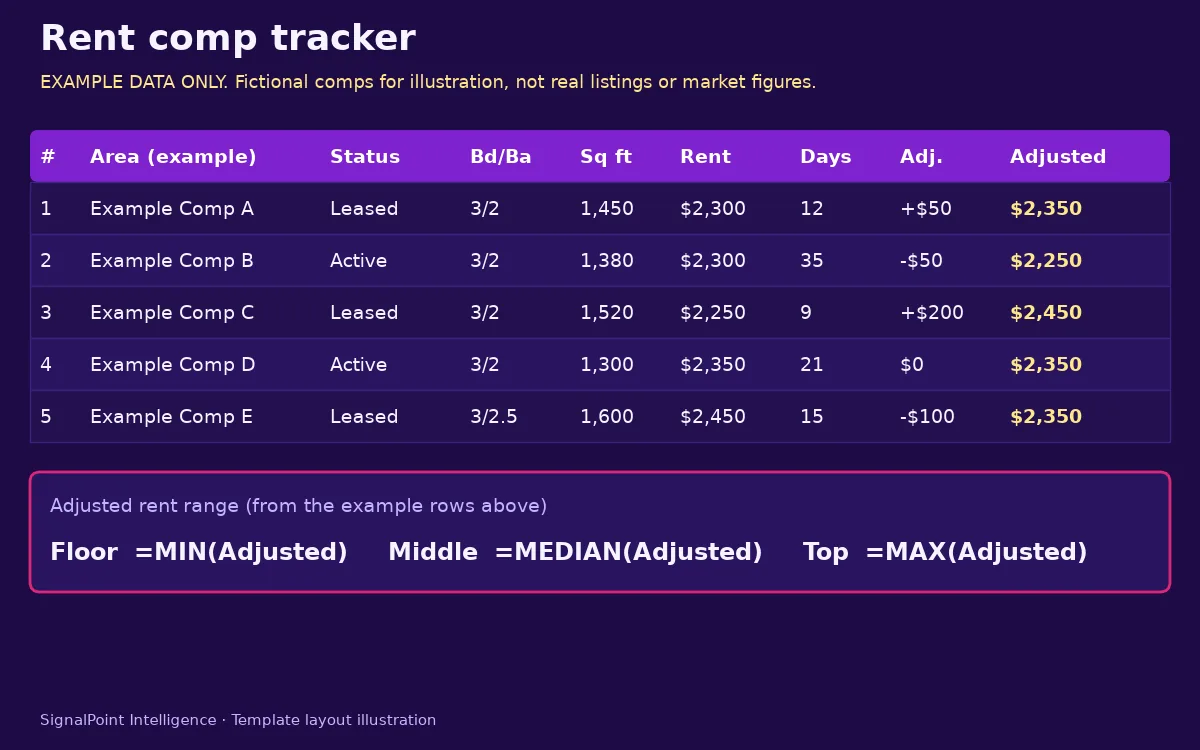
For each comp, record the asking rent, beds, baths, square feet, key features, pet policy and how long it has been listed. Keep it in a simple spreadsheet so you can compare side by side.
Free download: rent comp tracker spreadsheet
Get our comp tracker template (Excel and CSV). It has columns for each comp plus built-in formulas that turn your adjustments into a floor, middle and top rent range. Enter your email and the download link appears right away.
Tip: Active listings tell you what you are competing against today. Recently leased listings tell you what renters were actually willing to pay. You want both.
Step 3: Watch days on market
Asking rent alone can be misleading. A listing that has sat for weeks is probably priced above what the market will bear, while a unit that leased within days may have been priced a little low. When you see a cluster of similar units leasing quickly at a certain price, that is a strong signal of where demand is.
Also watch for price drops. If a comp has been reduced once or twice, the reduced price is closer to reality than the original.
Step 4: Adjust for differences
No comp will match yours exactly, so adjust up or down for what is different. Ask yourself what a renter would pay extra for, or what would make them choose another unit:
- In-unit washer and dryer versus a shared laundry room.
- A garage or covered parking, which many Tampa renters value for heat and storm protection.
- A fenced yard and a pet-friendly policy. Accepting pets widens your pool of applicants.
- Updated kitchen and bathrooms. Renovations show up clearly in listing photos.
- Pool or community amenities, especially in apartment and townhome communities.
- Who pays utilities and whether lawn care or pest control is included.
Be honest here. Owners naturally value their own upgrades more than renters do. Compare your unit to the comps the way a stranger scrolling listings would.
Step 5: Think about Tampa-specific factors
A few local factors are worth considering when you set rent in the Tampa Bay area:
- Seasonality. Demand often shifts through the year with school calendars, job moves and seasonal residents. Ask a local leasing professional or watch your comps over a few months to see the pattern for your neighborhood.
- Commute and location. Access to downtown, Westshore, the airport, USF, MacDill and major routes like I-275 and the Veterans Expressway affects what renters will pay.
- Insurance and storm readiness. Atlantic hurricane season runs from June 1 to November 30. Features like impact windows or a newer roof will not always raise rent directly, but they can help you stand out and lower your own costs.
- New construction. New apartment communities sometimes offer move-in specials. If one opens near you, check its effective rent after concessions, not just the advertised price.
Step 6: Set a range, then pick a strategy
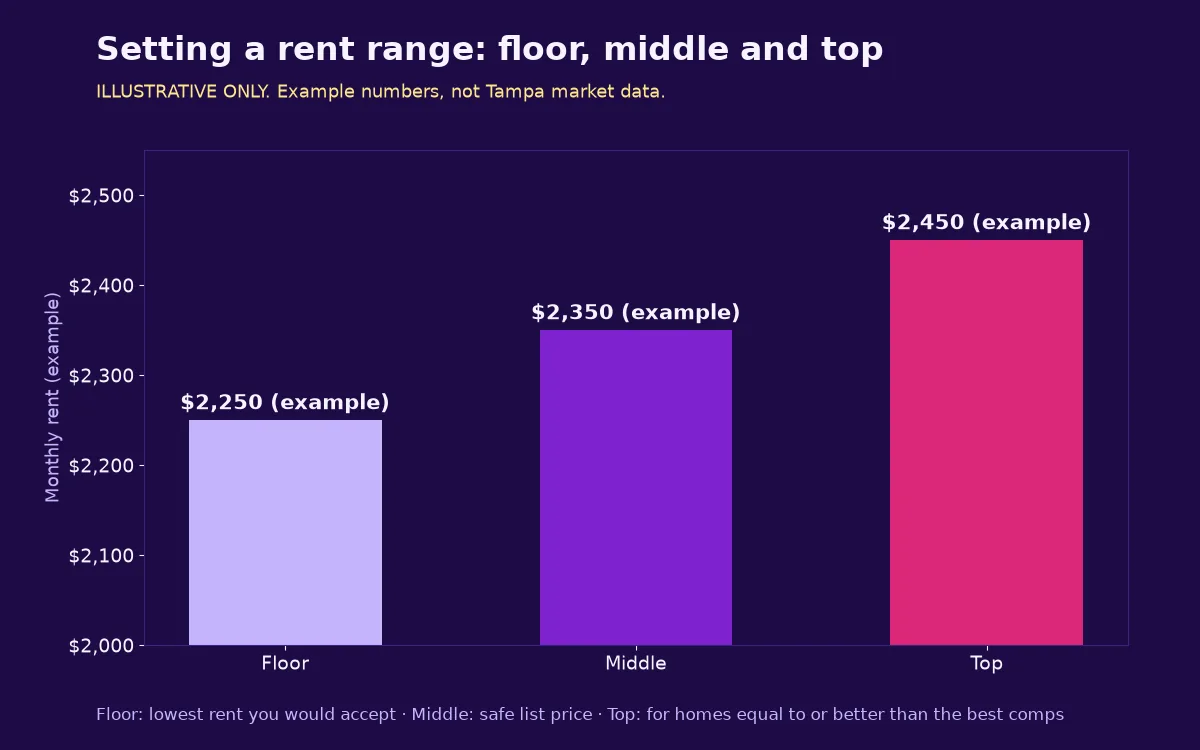
After adjusting, you should see a realistic rent range for your unit. Where you land inside that range depends on your goals:
- Lease fast: price near the middle or slightly below. This makes sense when a vacant month costs more than a small rent difference over the lease.
- Maximize rent: price near the top only if your unit is clearly better than most comps in condition, features or location, and you can afford a longer vacancy.
- Test the market: start near the top of the range and set a date, such as two weeks, to review inquiries and showings. If interest is weak, adjust.
Remember that a vacant month is real lost income. In many cases, a slightly lower rent that leases quickly earns more over the year than a higher rent that sits.
Step 7: Make the listing work as hard as the price
Even a well-priced unit can stall with a weak listing. Use bright, wide photos taken in daylight, lead with the features renters filter for, and state the pet policy, parking and included utilities clearly. Follow fair housing rules: describe the property, not the kind of person you want to rent to.
Step 8: Track results and adjust
Once the listing is live, track inquiries, showings and applications each week. A good price usually produces steady interest. If you get plenty of views but few inquiries, the price or photos may be the issue. If you get inquiries but no applications, look at your requirements, condition or showing process.
Common rent pricing mistakes
These are the mistakes we see most often when owners set rent on their own. Tap a question to see the answer.
How many comps should I use to price a rental?
Using only one or two comps, or comps from a different neighborhood, is a common mistake. Aim for five to ten comps that match your bedroom count and property type, ideally within the same neighborhood or a short drive away.
Should I set rent based on my mortgage and expenses?
No. Pricing based on your mortgage or expenses instead of the market is a common mistake. Renters do not see your costs.
Can I compare my house to apartments or homes with more bedrooms?
Avoid it. Comparing a house to apartments, or a two-bedroom to three-bedrooms, gives you the wrong rent. Match comps on property type and bedroom count first.
Do move-in specials at nearby communities affect my rent?
Yes. Ignoring concessions like a free month at nearby communities is a common mistake. Check the effective rent after concessions, not just the advertised price.
How long should I wait before lowering the rent?
Waiting too long to adjust when interest is low is a common mistake. Set a review date, such as two weeks after listing, and adjust if inquiries and showings are weak.
When to get a professional rental market analysis
Doing this yourself is very possible, but it takes time and access to good data. A professional analysis makes sense if you are pricing a new purchase, deciding between renting and selling, managing several units, or simply want a second opinion before you list.
SignalPoint's Rental Market Analysis is prepared by a real estate professional with hands-on apartment leasing and property management experience. You get local comps, a recommended rent range, amenity insights and a pricing strategy. If you manage multiple properties, you may also find our guide on how to analyze competitors for a property management company useful, along with our competitor analysis for property managers and real estate investor market research.
This guide is general information, not legal or financial advice. Check local rules and your lease terms before setting rent.
Local research for this topic: Tampa, FL.
Want a real estate professional to price it for you?
Our $99 Rental Market Analysis gives you local comparable rentals, a recommended rent range, amenity insights and a pricing strategy, emailed within 2-3 business days. No call needed.
Have a question? Email us at aversehorizon@gmail.com.